Posts tagged with Ambient
Here you can find all posts on the site tagged with Ambient.
Neon Drizzle: nearly three hours of generative Bitwig ambient with rain, distant sci-fi sounds and quiet E-flat minor drones.
Polarity's Soft Orbit (Ambient Tales) turns one generative Bitwig Grid patch into four 10-minute ambient drone versions.
A warm generative Bitwig Poly Grid drone where randomized Sine voices move through the circle of fifths while filtered Noise adds an airy, shifting top layer.
A generative Bitwig Poly Grid soundscape where modal harmony moves upward in perfect fourths while randomized tonal and noise layers drift through delay, chorus, filtering, and diffusion.

A self-running Bitwig Poly Grid soundscape where a sustained drone carries wind, rain, noise, and small randomized percussion through dense delay and reverb.
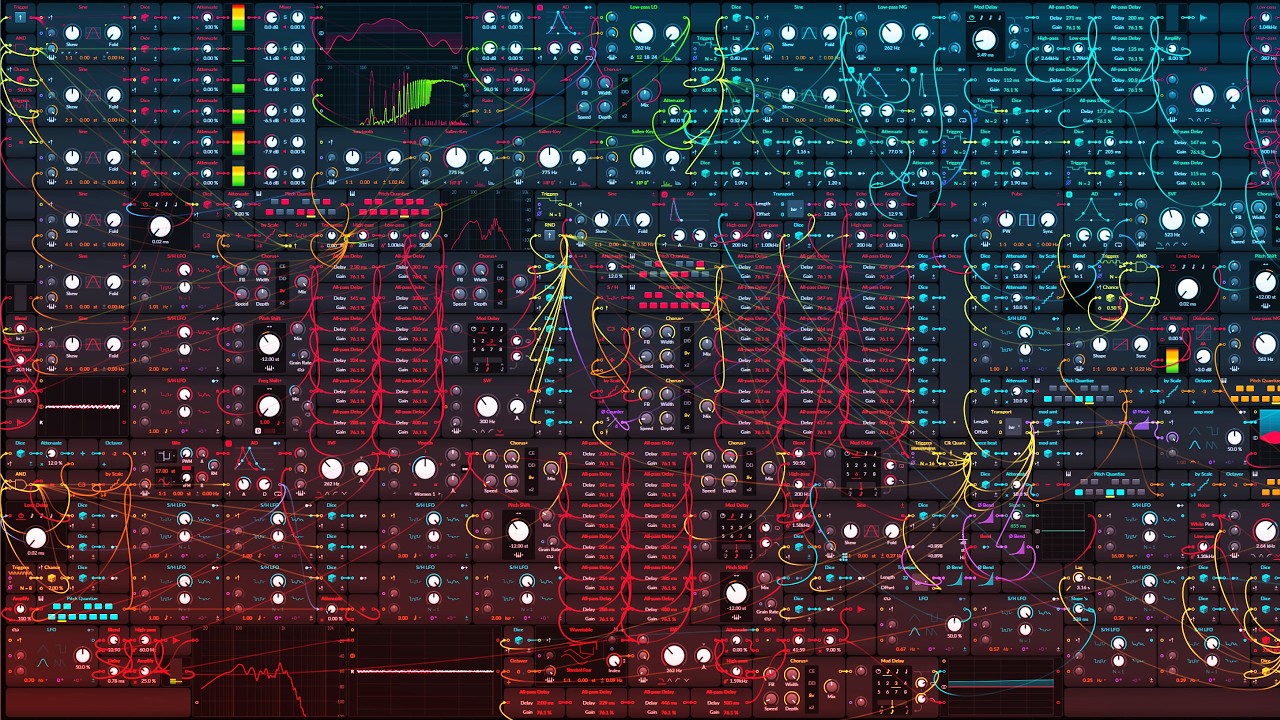
In this modular Bitwig patch, I tried to imagine a cold, dark place somewhere inside a wide asteroid field: a small spaceship drifting between the rocks while a tired asteroid miner takes a break and tries to sleep.
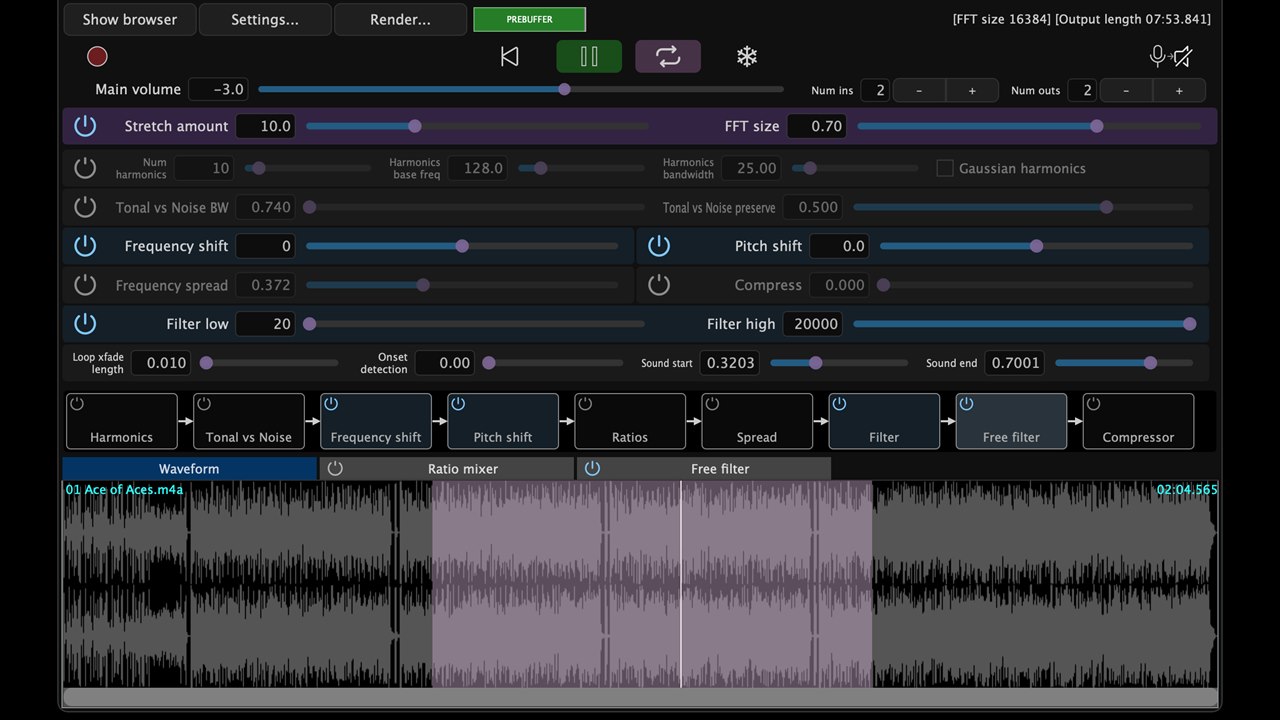
PaulXStretch is not just another granular time-stretching plugin. It is built around the Paulstretch algorithm, which stretches sound in the frequency domain, discards phase information, rebuilds the signal with randomized phase, and turns short recordings into wide, slow, spectral textures.
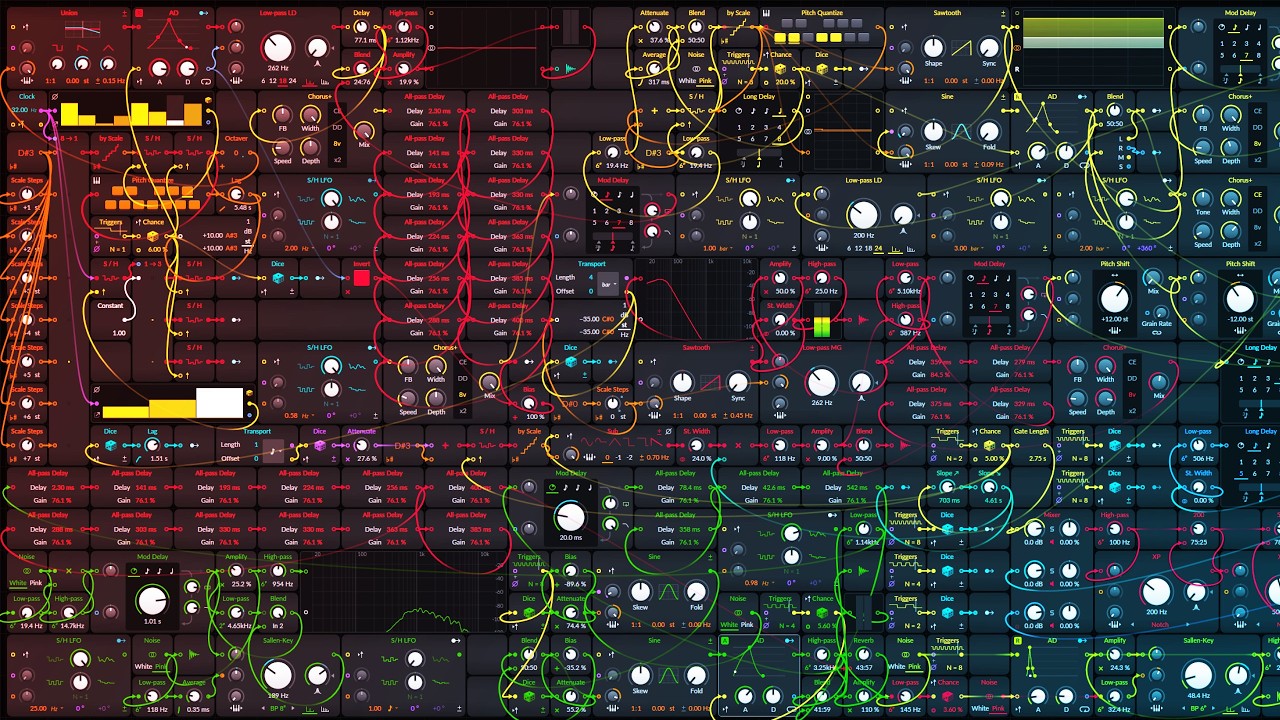
In this modular Bitwig patch, I tried to create the feeling of floating at the edge of the universe, far away from everything.

In this patch I created a slow-moving ambient soundscape for sleeping, built around a looping chord progression that unfolds very gently over time.

In this Bitwig Grid patch, I tried to create the feeling of drifting somewhere between galaxies.

Blade Runner City with lots of rain! This patch is obviously inspired by Blade Runner.

This time we’re heading to the beach. Waves are pretty easy, but getting that bubbly water sound just right isn’t so simple. On top of that there’s a seagull and some wind / a light breeze.

I tried using simple sequences based on probabilities or “chance” modules to create little melodies and chords. The melodies in the “pitches” modules play differently too, since I randomize the phase every 32 bars.

The patch sounds like you're sitting on a rooftop in a futuristic city, listening to the rain, the wind, the roar of engines, and some undefined banging and hammering.

So in this patch I tried to recreate animals or like a meadow vibe. Basically I’m building a little stream, a bunch of bees and birds, some distant car noises, and of course crickets chirping and stuff.

Gotta admit, I kinda lost control here. Some modules don’t really make sense, and in a few spots I’ve got no clue what’s going on.

Alright, here I made another static pad using multiple sine oscillators. of course, everything’s heavily modulated. The rest are sound effects that play sporadically and based on chance.

I took the old idea from the previous video and pushed it a bit further. The raindrops and wind sounds create a really nice vibe, and they’re made entirely from noise and filter movements, they actually make up most of the patch. The rest I filled out with some drones and a random noise generator.

Rainy city at night! This time I’m using different oscillators again for pads & lead sounds. On top of that there’s a lot of generated synth rain with droplets and noise.

Many all-pass delays create maximum reverb on all sounds. This should create a nice atmosphere with some random sounds. The Markov Generator creates notes in specific sequences, and this is used for a sine bleep.

I tried to use as few sound sources as possible for the pad and relied mainly on all-pass filters to stretch the sound and make it behave like a pad, even though it’s just a sine bleep every few seconds.

In this generative preset, I create pad sounds using an arpeggiator that I smear with a lot of Alpha delays, so it sounds like a pad even though it’s really just an arpeggiator.

Hey everyone! I’ve got a new generative patch I made in Bitwig. This time, it’s a bit more sequenced, which means I’m using Transport Modules to time certain events, like when the drums kick in.

For the patch, I recorded my own vocals, of course, all nicely processed with reverb and packed them into the sampler. I also added some water sounds that I generate with filters. There are water droplets too, so it all kind of reminds me of a cave system on some alien planet. I kept the atmosphere pretty static, meaning there aren't many melodies or anything like that.

Alright, in this Bitwig Grid patch, I tried to create some ambient vibes using a bunch of different voices and synthesis types. Of course, there's an arpeggio in there too, and I reused the effect generator from the patch before last because I thought it fit really well and adds a nice depth to the atmosphere.

Alright, in this Bitwig Grid patch, I tried to randomly generate a new track every 32/16 bars. It's all based on randomness noise generators, so it's basically a Melodic Techno track generator (sort of). Of course, it can be expanded further, but you can already see my CPU is really pushed to its limits at the end. I’d love to add more, like percussion generators and stuff. There’s definitely more potential there.

I just built a cool drone in the Grid again, with a ton of pads and a lead sound that randomly plays every now and then. There are also some random FX sounds, plus a little wind and rain machine.

This video explains how to easily create lush, spacey ambient drone music in Bitwig Studio using the Grid, focusing on stacking sine oscillators tuned to the root, fourth, and fifth notes of a scale with voice stacking, modulation, randomization, and effects like reverb and chorus. The presenter demonstrates building evolving harmonies and textures, adding sampled keyboard sounds and a simple bass, and shows how to keep everything musical while allowing flexible sound design. The result is a rich ambient soundscape perfect for long YouTube videos, with a workflow that can be adapted and expanded creatively.

This Math based generative grid creates pad sounds, little bleeps, a bass line, drums, kicks, snares, and the snare sounds a bit like a rimshot (phaser+), and yeah, it’s all more or less generative. You can draw your own melody in the Scrawl oscillator up top, and then it behaves totally differently. Have fun with it and let me know what you think! ps: you can change the scale/mode of Bitwig and the Grid changes notes / root pitch!

This patch recreates your childhood with a nostalgic soundscape. It features a blend of ambient textures and rhythmic elements, perfect for evoking memories of simpler times.

In this video, I demonstrate how to turn a Bitwig grid patch into a full track by separating and bouncing individual instrument layers using the DC offset trick for modulation-based audio routing. I explain step-by-step how to split sounds within the grid, assign each to separate tracks, and export them for further arrangement and production. While the process isn't perfect or high-end, it allows for creative freedom, layering, and practical workflows to develop unique ambient tracks from simple beginnings.

I sat down last night and whipped up this grid patch. This time, the notes and gate triggers are based on probabilities. There are two pad synths, a random noise generator for some unpredictable FX, and a sparsely firing pulse lead. I also added a bunch of post fx like reverb and shimmer/audio pitch, all built from my own grids.

3 Note chord based ambient sci-fi atmosphere with Bitwig. Invokes some Vangelis vibes with thick pads and a pulse lead sound drowned in a grid reverb.

In this video, I delve into creating a melodic track in Bitwig Studio, starting with a foundational drone and building up with various synths and effects to craft a unique sound. Throughout the process, I experiment with different instruments, modulation techniques, and external gear, while explaining my choices and techniques as I go. Although the track isn't fully polished, I demonstrate how I develop ideas and lay the groundwork for further refinement and mastering.

In this video, I demonstrate how to create interesting descending and ascending pitch sequences in Bitwig Studio's grid by using modules like pitch bus, octave wrapper, and pitch quantizer. I explain how to maintain pitches within a specific octave, use the transport module for polyrhythmic structures, and combine multiple sequences with different parameters. You can find the patch linked in the description to explore these concepts further.

In this video, I start by using polymer to create a quad progression with a saw 16 fat spread out. I then add chorus and delay effects, as well as a no transpose and a global modulator. Next, I record the sound into audio and put it into a sampler, applying reverb and using the transpose feature. I also create a bass from the recorded sound and add percussion elements to create an interesting pattern. Finally, I introduce a lead sound and make some adjustments to the cutoff, volume, and randomization. I end the video with a crash and thank the viewers for watching.

In this video, I create a generative patch using a Poly-Grid instrument track in monophonic mode. I experiment with feedback for pitch generation and incorporate audio pitch modulation. I add various effects like delay, chorus, filter, and reverb to shape the sound, and create a complex and evolving composition.

In this video, I demonstrate how to create a random note generator using the Polymer synthesizer in Bitwig Studio. I use the Node Grid and the Dice module to generate random nodes, and the Triggers module to create eight equally spaced triggers within one bar. I then use the Shift register to record and modify the generated sequence, allowing for variations and alterations in the playback.

In this video, I introduced my Markov Chains preset, which is a melody generator based on probabilities. I explained how it works and how I coded it using information from the Hook Theory website. I demonstrated how to create an ambient drone sound using the preset and additional modulations and effects.

In this video, I explore creating new sounds using the Bitwig Grid. I start by sampling different instruments and then manipulate the samples using various modules such as triggers, quantizers, and modulation. The result is a unique and atmospheric ambient sound that can be further customized and experimented with.

In this video, I share my process for creating ambient music using samples from YouTube. I demonstrate how to record audio from the Windows output and use it in a granular sampler to create unique pad sounds. I also incorporate a minimal beat, piano melodies, and effects like reverb and delay to build a chill-out tune.

Small Hardware and Bitwig jam i did earlier today. Just playing around with synths and hitting record on OBS. ENJOY

In this video, I take you through the process of building a sound in Bitwig Studio. Starting with a grid, I create a pattern using a sine oscillator, shape the volume with an envelope, and quantize the notes to a scale. I also add voice stacking, effects, and layer different elements to create a complete composition.

In this video, I start from scratch in Bitwig Studio to create a nice sounding loop using special techniques. I use the Poly-Grid to create background drones with sine oscillators and phase modulation for interesting overtones. I then sample these sounds and use them in a sampler, add effects, and create percussion elements to complete the loop.

I was a bit bored today and thought I'd record a few sequences while playing on my synths. Nothing special, just messing around. The bass comes from the @behringer Poly-D, arps from the @MoogSynthesizers M32, drums from the DFAM, and a drone and @modarttvideos Pianoteq from @bitwig

I'm adding various harmonics in and out with the @MoogSynthesizers Subharmonicon, running it through a Valhalla Supermassive, and recording everything in Bitwig. In @bitwig , I'm playing a random backdrop that I created in another tutorial video yesterday https://youtu.be/J_Iw2eUMYGc My @behringer Poly-D is also providing a nice warm bass. Nothing special, really, but I felt like recording and documenting the whole thing.

In this video, I demonstrate a workflow for creating complex patterns and ambient songs using the Trident synthesizer. By sampling different presets from the bell and mallet category, slicing them, and renaming the files, I can load them into a sampler to create a unique and dynamic sound. This method allows for easy experimentation and can be applied to various genres, from ambient to percussion.

In this tutorial, I demonstrate how to create ambient sounds using 32 instances of Paul Stretch. I start by selecting sounds from the Triton plugin and adding random reverbs for depth. Each instance is then sampled using different keys, lengths, and stretch amounts, resulting in a varied and powerful drone sound. By layering these instances and adding simple melodies, you can create a thick atmospheric dance track.

In the video, I use the free plugin PaulXStretch 23 times. In each instance, I've recorded one note and a unique sound from the Korg Triton. Each instance also has a different recording length, different panning and stretches the sample differently. It's always great to see and hear how you can create soundscapes with such simple workflows.

Time for another improv on my long time not used gear. Used all my moog studio devices, polyD and some pads from bitwig

In this update video, I talk about how I have been busy with my daily job and preparing presets for the release of Bitwig Studio 3.0. I explain that my goal is to have a collection of good sounding presets ready for new users who want to explore what's possible with the grid. I showcase a piano emulation I created using filters and physical modeling synthesis, along with mechanical sounds from a friend's piano. I also introduce a new reverb called Kitsch-Verb and discuss using random modulation to create an organic feel. I share a work-in-progress version of the piano preset on my GitHub repository and provide a link in the description. I also mention that my friend, Skyance, has released a sample pack on a new website called Intimate Noise and I encourage viewers to check it out. Lastly, I ask for feedback on the piano preset and mention that I will be discussing other patches in upcoming videos.
More tags to choose from: